
Can Your Employer Force You Into Arbitration in California? What 2026 Court Decisions Say
By Aidin Ghavimi, Managing Attorney ·
Signed an arbitration agreement at work? Four 2026 California appellate decisions show when employers can't force job claims into arbitration: narrow clauses, one-sided terms, and waiver.
Employment Law
6 min read
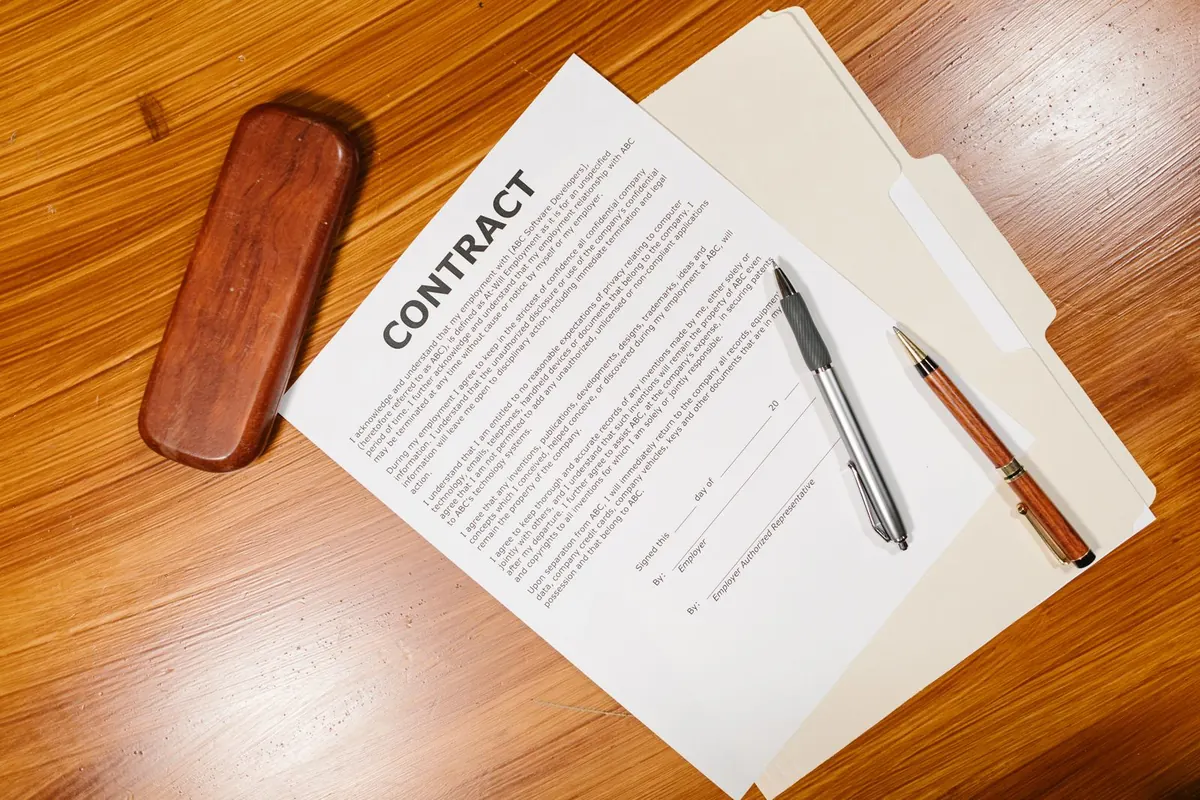
Most California employees sign an arbitration agreement on their first day of work, often buried in a stack of onboarding forms. Months or years later, when something goes wrong, the employer points to that signature and argues that the employee's discrimination, retaliation, or wrongful termination case belongs in private arbitration instead of in front of a jury.
That argument does not always win. In August 2026 alone, California's Courts of Appeal issued four decisions that refused to send employment cases to arbitration, each for a different reason. Together they show the main questions courts ask when an employer tries to compel arbitration, and what employees should look for in their own paperwork.
Having a problem at work? Our California employment lawyers handle discrimination, harassment, retaliation, wrongful termination and unpaid wage cases. Consultations are free.
Why Arbitration Matters to Employees
Arbitration is a private process. Instead of a judge and jury, a privately paid arbitrator decides the case. Discovery is usually more limited, the proceedings are confidential, and there are very few grounds to appeal an arbitrator's decision. Employers often prefer arbitration for those reasons. Employees often prefer court, where a jury of ordinary people decides whether the employer broke the law.
California courts generally enforce arbitration agreements, but only if the agreement actually covers the dispute, is not unconscionable, and has not been waived by the employer's own conduct. The California Supreme Court's decision in Armendariz v. Foundation Health Psychcare Services (2000) also requires mandatory employment arbitration agreements covering statutory claims to meet minimum fairness standards, such as a neutral arbitrator, adequate discovery, a written decision, the same remedies available in court, and no requirement that the employee pay costs unique to arbitration.

1. The Agreement May Not Cover Your Claims: Morales v. Superior Court
The first question is whether the employee ever agreed to arbitrate this kind of dispute at all. In Morales v. Superior Court (Fourth Dist., Div. One, Aug. 3, 2026), an employee sued after her termination, alleging disability discrimination, failure to accommodate, failure to engage in the interactive process, and retaliation under California's Fair Employment and Housing Act (FEHA) and the California Family Rights Act (CFRA), along with wrongful termination in violation of public policy. The trial court ordered the case to arbitration.
The Court of Appeal reversed. The arbitration clause in her employment agreement covered disputes about the agreement itself and claimed violations of it. Her claims did not depend on the agreement. They came from statutory rights and public policy protections that exist whether or not an employment contract was ever signed, and that employees cannot waive. Because those claims fell outside the clause, the court ordered the trial court to deny the employer's motion.
Takeaway: Read the exact words of the arbitration clause. A clause limited to disputes "arising under this agreement" may not reach discrimination, harassment, retaliation, or leave claims that come from California statutes.
2. One-Sided Agreements May Be Unenforceable: Cluck v. GEO Secure Services
Even when a clause covers the claims, a court will not enforce it if it is unconscionable. California law looks at two things: procedural unconscionability (how the agreement was presented, such as a take-it-or-leave-it form) and substantive unconscionability (whether the terms are unfairly one-sided). The more of one, the less of the other is needed.
In Cluck v. GEO Secure Services (Fourth Dist., Div. One, Aug. 3, 2026), the employee had signed an arbitration agreement and a separate confidentiality agreement at hiring. The Court of Appeal read the documents together. The arbitration agreement was presented as a condition of employment, and its opt-out procedure was cumbersome. More importantly, the combined documents sent the claims the employee was most likely to bring into arbitration, while letting the employer take the claims it was most likely to bring (confidentiality, noncompetition, and nonsolicitation claims) to a court in Florida.
The court held the arrangement unconscionable because it lacked mutuality. It also refused to simply cut out the offending terms and enforce the rest, because the one-sidedness was built into the parties' whole dispute-resolution framework.
Takeaway: Look beyond the arbitration form. Confidentiality agreements, handbooks, and offer letters signed the same day can change how a court views the arbitration agreement.
3. Employers Can Waive Arbitration by Litigating First: Mitchell v. Lilac Solutions
An employer that wants arbitration has to act like it. In Quach v. California Commerce Club (2024), the California Supreme Court held that a party can waive its right to arbitrate through conduct that is inconsistent with that right, and that the employee does not have to prove the delay harmed them.
Mitchell v. Lilac Solutions, Inc. (First Dist., Div. Four, Aug. 20, 2026) applied that rule to an employment case alleging wrongful termination, discrimination, and sexual harassment. Before asking for arbitration, the defendants had filed cross-claims and pursued extensive discovery. They moved to compel arbitration only after the plaintiffs filed an anti-SLAPP motion. The Court of Appeal agreed that they had waived arbitration, focusing only on the defendants' own conduct.
The defendants argued that the sexual harassment claim put them in a bind, because a federal law (discussed below) can keep those claims out of arbitration, and they needed discovery to test the claim. The court was not persuaded. Their discovery went far beyond the harassment allegations, the timing of their motion tracked the anti-SLAPP filing rather than anything about the harassment claim, and they could have asked the court to pause or sequence the case instead.
Takeaway: If your employer has spent months litigating your case in court, it may have given up the right to move it to arbitration.
4. Employers Do Not Get Unlimited Do-Overs: Hickenbottom v. Medical Solutions
In Hickenbottom v. Medical Solutions (Fourth Dist., Div. One, Aug. 26, 2026), the employer's first motion to compel arbitration was denied because it relied on an arbitration provision that had been replaced by a newer one. The employer then filed a second motion based on a different agreement, again seeking to send the employee's individual claims to arbitration and dismiss the class claims.
California Code of Civil Procedure section 1008(b) controls repeat motions. A party asking again for relief that was already denied must file a declaration identifying new or different facts, circumstances, or law, and explain why that information was not presented the first time. The employer did neither. The Court of Appeal held that the trial court correctly found it lacked jurisdiction to hear the second motion, and dismissed the appeal because an order denying a renewed motion cannot be appealed.
Takeaway: Procedural rules apply to employers too. An employer that relies on the wrong agreement may not get a second chance.
What to Do If Your Employer Says You Must Arbitrate
- Gather every document you signed. Ask for your personnel file, which California employers must provide on request, and collect the offer letter, handbook acknowledgments, arbitration agreement, and any confidentiality or noncompete forms.
- Check the scope. Does the clause cover statutory claims like discrimination and retaliation, or only disputes about the agreement?
- Look for one-sided terms. Fee-splitting, shortened deadlines, limits on damages, restricted discovery, or rules that let only the employer go to court are red flags.
- Note sexual harassment or assault allegations. Federal law may let you keep the case in court. See our guide on sexual harassment claims and forced arbitration.
- Track the employer's litigation conduct. Delay and active litigation can support waiver.
- Watch your deadlines. An arbitration fight does not stop the clock on filing with the Civil Rights Department or in court.
Arbitration law changes quickly, and the outcome often turns on specific wording and timing. This article is general information, not legal advice about your situation.
Talk to a Lawyer About Your Arbitration Agreement
If your employer is trying to force your discrimination, retaliation, harassment, or wrongful termination claim into arbitration, Starpoint Law can review your agreement and explain your options. Call us or contact us online for a free consultation.
Talk to a California Employment Lawyer
If this issue affects your job, Starpoint Law can review your situation in a free consultation. Learn more about how we help with:
Employment Law
Contact Us
You Don’t Have to Figure This Out Alone.
Whether you were injured or mistreated at work, we’ll explain your options clearly — and guide you through every step. No fees up front. No pressure. Just answers.




©2026 Starpoint Law. All Rights Reserved