
My California Car Accident Police Report Is Wrong | What Do I Do?
By Aidin Ghavimi, Managing Attorney
Found a mistake in your California crash report? How to get a copy, ask the officer for a supplemental report, add your own statement and protect your claim.
Car Accidents
11 min read
Short answer: Get a full copy of the report, then go to the agency that wrote it (the CHP, the city police department or the sheriff’s station) and ask the investigating officer to write a supplemental report correcting the mistake. Bring proof. Factual errors, such as a wrong license plate, insurer or name, are routinely corrected. Officers rarely change their opinion of who was at fault, but you can ask that your own written statement be added to the file, and the opinion does not bind the insurance companies or a court.
Our car accident attorneys can review whether these facts describe a claim in a free case review.
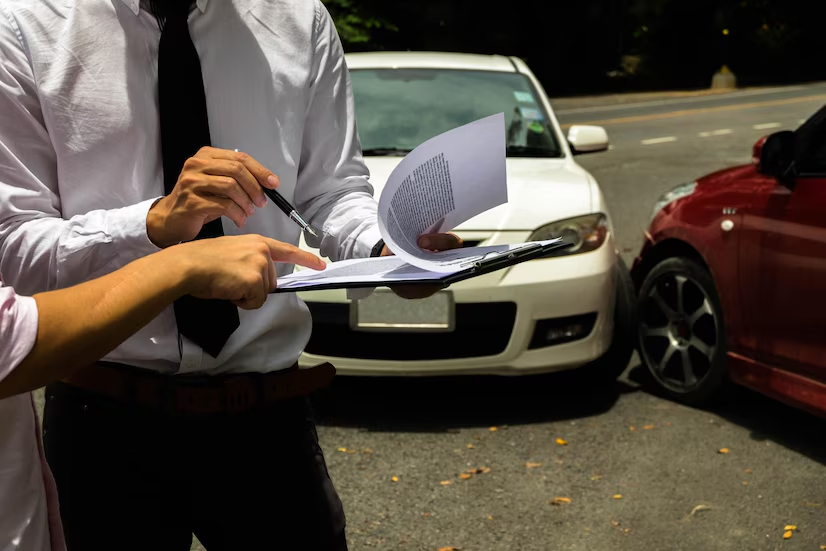
It’s not uncommon for car accident victims to receive a copy of the report and find that some information is incorrect.
Some people feel they were wrongly determined to be at fault for the accident, while others find factual errors and missing information.
A mistake in the report is not the final word on your claim. Below is how to get a California traffic collision report corrected, step by step, and what to do if the officer won’t change it.
Why the Police Report Matters
Insurance companies request the police report early and lean on it when they decide who was at fault. A report can include:
- Accident details (time, date, place, etc.);
- Contact and insurance information for all involved parties;
- Statements from the drivers and witnesses;
- Injury documentation;
- Damage to vehicles;
- Photographs and a scene diagram;
- Citations issued; and
- The officer’s narrative and opinion of the “primary collision factor,” meaning the main cause of the crash.
If any of that is wrong, it can slow down your claim or give the other driver’s insurance company a reason to deny it.
First, Identify What Kind of Mistake It Is
How you fix the report depends on what is wrong with it. Most errors fall into one of three groups.
Factual errors (easiest to fix)
A misspelled name, wrong license plate, wrong vehicle make or model, wrong insurance company or policy number, wrong date, time or location, or a driver listed as a passenger. These are worth fixing even when they seem minor. Insurers use the report to identify the other driver and find their coverage, and a wrong policy number can stall your claim for weeks.
Missing information
Your injuries aren’t listed (common when the pain started after you left the scene), your statement wasn’t taken, a witness wasn’t interviewed, or damage wasn’t documented. An officer can often add this in a supplemental report.
Disputed facts or fault (hardest to change)
The narrative repeats only the other driver’s version, the diagram shows the wrong lanes or direction of travel, or the officer named you as the cause of the crash. Officers rarely change an opinion just because you disagree. What can change it is evidence the officer didn’t have, such as video or an independent witness.
How to Correct a Police Report in California: Step by Step
Step 1: Get a complete copy of the report
Ask for the full report, including the narrative, diagram and statements, not just the first page. Drivers, injured passengers, vehicle owners, and their attorneys and insurers are entitled to a copy (Vehicle Code § 20012). Where you get it depends on who responded to the crash:
- California Highway Patrol (freeways and unincorporated roads): Submit form CHP 190, Application for Release of Information, to the CHP Area office that took the report, with a copy of your photo ID. Under CHP policy, copies cost $10 per 25 pages, and an involved party can review the full report at the office for free.
- LAPD (surface streets in the City of Los Angeles): Request the report online through LAPD’s traffic report page, or mail LAPD’s request form with a $19 check or money order to the LAPD Records and Identification Division, Document Processing Unit, P.O. Box 30158, Los Angeles, CA 90030. You’ll need the report (DR) number. LAPD says to allow at least 45 days after the collision before requesting the report online, and reports involving an arrest, a death or a minor must be requested by mail.
- Los Angeles County Sheriff (unincorporated areas and contract cities such as West Hollywood, Calabasas, Malibu and Santa Clarita): Request the report from the sheriff’s station that handled the collision.
- Other city police departments (for example Santa Monica, Beverly Hills, Burbank, Glendale, Pasadena or Long Beach): Contact that department’s records unit.
Write down the report number, the investigating officer’s name and ID number, and the station or traffic division. All of these are on the first page.
Step 2: List every error and gather proof
Go through the report page by page and list each mistake, noting the page and section where it appears. For each one, gather a document that proves the correct information:
- Your driver’s license, registration and insurance card;
- Photos of the scene, the vehicles and your injuries;
- Dashcam footage, or video from nearby businesses and doorbell cameras;
- Names and written statements from witnesses;
- Repair estimates; and
- Medical records showing when you were treated and for what.
Ask for business and doorbell video right away. Many camera systems record over old footage within days or weeks.
Step 3: Contact the investigating officer
Call the station or traffic division that handled the collision, give the report number, and ask for the investigating officer. Officers work rotating shifts, so ask when they are next on duty or leave a message with your number. If you can’t reach the officer, ask for the traffic supervisor (usually a sergeant).
The Los Angeles County Sheriff’s Department, for example, requires the investigating deputy to correct errors and omissions, and lets a traffic supervisor fix minor spelling, date and time mistakes when the deputy isn’t available (LASD Manual § 5-05/050.30).
Step 4: Go to the station and ask for a supplemental report
Bring your ID, a copy of the report, your list of errors and copies of your evidence. Ask the officer to write a supplemental report correcting the record. Officers generally don’t rewrite the original report; the supplemental report is added to the file, and anyone who requests the report later receives both.
Most California agencies use the CHP’s standard forms. The CHP 555 is the Traffic Collision Report itself, and the CHP 556 is the supplemental form used to change or add information after the report has been processed. Leave copies of your evidence, never originals.
Step 5: If the officer won’t change it, ask to attach your statement
Write a short, signed statement that gives your account of the crash and lists the errors, and ask that it be added to the report file. Agencies don’t always agree to attach it, but ask anyway. Keep a copy either way, because you will send the same statement to the insurance companies.
Step 6: Put everything in writing
After any call or visit, send a short email or letter confirming who you spoke with, the date, and what you asked for. Ask for the officer’s or supervisor’s email address so you have a paper trail. Once a supplemental report is written, request an updated copy of the full report.
Step 7: Act quickly
Corrections are easiest before the report is finalized. Under the Sheriff’s policy, errors are corrected before final processing, and a supplemental form is required once the report has been sent to the CHP’s statewide records system. Start within days of getting your copy, not months. If your copy isn’t available yet, you can still call the investigating officer about errors you already know of, such as wrong insurance information.
Sample request to correct a police report
You can adapt this short letter for your request. Bring it to the station or send it to the investigating officer:
[Date]
[Agency], [Station or Traffic Division]
Attn: Officer [Name], ID No. [Number]
Re: Traffic Collision Report No. [Number], collision on [date] at [location]
I was the driver of Vehicle [1/2] in this collision. I request a supplemental report correcting the following errors:
1. Page [#], [section]: The report lists my insurance company as [X]. My insurer is [Y], policy no. [Number]. A copy of my insurance card is attached.
2. Page [#], narrative: The report states [what it says]. In fact, [correct fact], as shown in the attached [dashcam video / witness statement / photos].
If the report will not be changed, please add the enclosed statement to the report file. I can be reached at [phone] or [email].
[Name and signature]
Hiring a Los Angeles personal injury attorney is also an option. Your attorney can contact the department directly, request the supplemental report and preserve video before it’s gone. A request from an attorney may carry more weight.
Can a Police Report Be Changed After an Accident?
Yes, but the original usually isn’t erased. The officer adds a supplemental report to the file that corrects or adds information. Factual corrections are routine. Changing the officer’s opinion of fault is rare and usually takes evidence the officer didn’t have when writing the report.
If the department refuses to change the report, keep your evidence and your statement. The report is only one piece of evidence, and the steps below protect your claim either way.
Protect Your Claim Even If the Report Doesn’t Change
- File an SR-1 with the DMV within 10 days if anyone was injured or killed, or property damage was over $1,000 (Vehicle Code § 16000). This is your own report to the DMV, separate from the police report. See our guide on how to report a car accident in California.
- Tell your insurance company in writing that you dispute the police report, and send them your statement and evidence. Insurers do their own liability investigation and aren’t bound by the officer’s opinion.
- Be careful with the other driver’s insurer. Don’t give a recorded statement before you understand your rights. Read how to talk to an insurance adjuster in California.
- Get medical care and keep the records. If the report says “no injury,” your medical records are what prove otherwise. See should I go to the hospital after a car accident?
How the Police Report Affects Liability
The officer usually arrives after the crash and relies on what the drivers and witnesses say. If the officer decides you are the primary cause of the collision, the other driver’s insurance company will use that to its advantage, and it may deny your claim if it believes its insured was not at fault.
But the report doesn’t decide fault. In a California lawsuit, the police report itself generally isn’t admitted as evidence because it is hearsay, and an officer who didn’t see the crash usually can’t give an opinion on who caused it. Fault is decided on the evidence: testimony, photos, video, physical damage and, when needed, accident reconstruction. If the insurance company denies your claim, your attorney can file a lawsuit and pursue compensation through litigation.
California is also a pure comparative negligence state. That means you have the legal right to claim compensation for your damages, even if you are 99% at fault. Your percentage of liability will reduce your damages award.
For example, if a jury finds you 70% at fault, you could collect up to 30% of your damages. Because of the state’s negligence laws, it may be worth pursuing a claim even after the other driver’s insurance company denies liability.
Will Errors on the Police Report Affect My Personal Injury Claim?
Depending on the errors, an incorrect police report can affect your claim in several ways.
The other driver’s insurance company may not be as willing to settle if it knows the police report favors its insured.
If the officer misstated factual information or didn’t document your injuries, it may be necessary to hire experts who can testify on your behalf.
For example, suppose the report understates the vehicle damage and severity. To counter it, you may need scene photos, repair estimates, a statement from the repair shop, or even an accident reconstructionist.
Call 310-424-9971 For a Free Consultation Today
Talk to a Personal Injury Attorney
The best way to minimize the potential impact of police report errors on your injury claim is to hire a skilled Los Angeles personal injury attorney.
At Starpoint Law, our attorneys have years of experience assisting clients just like you.
We routinely represent injured victims whose claims are complicated by police report mistakes. We can request the full report, contact the investigating agency, gather the evidence that answers the report’s errors, and fight for the compensation you deserve.
Contact our office today to learn more about how we can help with all your personal injury needs.
Where You Can Find Our Sherman Oaks Office
Car Accidents
Contact Us
Our Testimonials
What Our Clients Say


Aidin at Starpoint helped guide me through initial consultations and boost my morale. Although I managed to settle the disagreement quickly on my own behalf, thank God, Aidin was my first choice of defense. Aidin was knowledgeable and confident about several laws and methods to respond to the specific complaints that could turn the situation around and work in our favour!

Great people. Good lawyers and legal aids. They will work diligently for you

I’d like to take this moment to thank Aidin, Eva, Marisol, and all the others that worked hard at this law firm while working on my case.
They are excellent! It is a difficult thing to experience once you get to a point in any matter that attorneys have to get involved. They made this process comfortable. Aidin had been thorough from day one. He made everything make sense to me and there were no surprises when my case was closed. Eva was professional and friendly. Highly recommend them!
Thank you Starpoint for making me feel confident in your team from the very beginning.

Aidin is an amazing lawyer! I highly recommend Star point to anyone looking for a law firm that will help you get the best you deserve

I was involved in a car accident last May 2019. I reached out to Starpoint law firm and my attorney John Vafa Handled my case very strongly. In less than a year My case settled for 750,000 dollars. Thank you so much Starpoint law for being so kind, caring and strong.
I recommend Starrpoint law firm and attorney John Vafa to everyone if they want to get a good result and get what they deserve after any kind of accident.

I am absolutely astonished by the service. Meeting the lawyer Aidan, it was the best that had happened in my life. He was the only lawyer te hat had faith in my case and thanks to him and John, I can feel better about myself after the accident. They are very professional, but apart from that they are such great human beings. I would definitely recommend them!

Very quick to answer any questions, took care of our case very quickly. Highly recommend.

Paymon John Vafa is in my opinion a great lawyer. He’s done a pretty amazing job on my case. I’m very grateful and wish him well.

I like they professional way they take my case recommend very a professional business.

I had such a great experience with their team. Very pleasant, trustable, clear, and communicative. I was not sure about the whole process but they explained everything along the way. Thank you so much!

My legal representatives Aidin Ghavimi and Diana have been very supportive and understanding of my legal needs with their professionalism and excellent communication. I really appreciate and highly recommend Starpoint Attorneys at Law!10/28/25 update: Now that the opposing counsel has come to a most favorable settlement, I can’t thank you enough for your diligence and support during this difficult time for me. Aidin and the Starpoint family have been absolutely amazing!

Everyone at this office is great! Communication, professional, very helpful and they look out for you not their pockets. I had a great team i highly recommend them!
You Don’t Have to Figure This Out Alone.
Whether you were injured or mistreated at work, we’ll explain your options clearly — and guide you through every step. No fees up front. No pressure. Just answers.




©2026 Starpoint Law. All Rights Reserved