
How Much Does an Employment Lawyer Cost in California?
By Aidin Ghavimi, Managing Attorney · · Español
Starpoint Law takes California employment cases on contingency: a percentage of the recovery, and no attorney fee unless we recover money. If we don't win, you owe Starpoint Law nothing — no attorney fee and no case costs. We do not bill those cases by the hour, and we do not charge a retainer or a flat fee. California does not set the percentage. It is written in the fee agreement, it is negotiable, and we do not publish one firm-wide rate.
Employment Law
9 min read
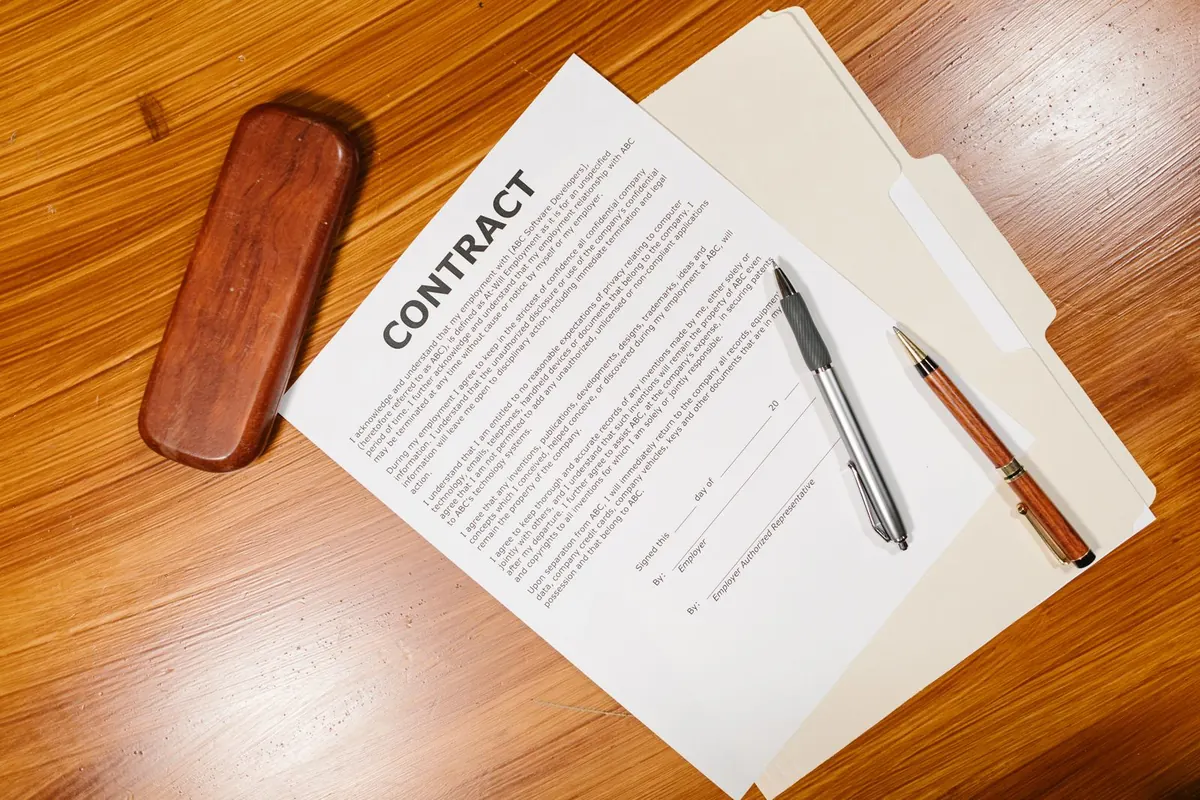
People asking how much an employment lawyer costs in California are usually asking two things: do I have to write a check up front, and what percentage comes out if the case recovers money.
Direct answer. Starpoint Law takes California employment cases on contingency: a percentage of the money recovered, and no attorney fee unless we recover money. We do not bill those cases by the hour, and we do not charge a retainer or a flat fee. California does not set that percentage. Business and Professions Code section 6147 requires a written agreement that states the rate and says the fee is not set by law and is negotiable. Starpoint Law handles employee cases on contingency. We do not publish one firm-wide percentage. The agreement for your case states it, and we explain it in a free consultation. If we don't win, you owe Starpoint Law nothing — no attorney fee and no case costs.
Talk with Starpoint Law. Call 310-424-9971 or request a free consultation. Consultations are free. There is no attorney fee unless we recover money for you. Learn more about our California employment lawyers.
What a contingency fee is
A contingency fee is conditional. The lawyer's fee depends on a recovery, by settlement or by a judgment. At Starpoint, employment cases use that model. You are not billed by the hour, and you do not pay a retainer or a flat fee to start.
That is the model on our wrongful termination, wage and hour, and harassment pages: consultations are free, and there is no attorney fee unless we recover money for you. The same is true of our discrimination and whistleblower work. The homepage states it as no fee unless we win. The precise version is the one in the fee agreement: no attorney fee unless money is recovered.
Lawyers who represent companies often bill the employer by the hour. Some other firms also charge hourly or flat fees for advice. That is their arrangement. It is not how Starpoint handles an employee's case. A defense lawyer paid by the employer is not your lawyer.
Tiers: the percentage often changes as the case goes further
Employment agreements commonly use tiers rather than one number for every stage. A typical structure, not a Starpoint rate card, looks like this:
- Before a lawsuit. One percentage if the case resolves by negotiation, an agency settlement, or a severance, before a complaint is filed in court.
- After a complaint is filed. A higher percentage once the case is in litigation or arbitration and the lawyer is doing discovery, motions, and hearings.
- Through trial or a final hearing. Some agreements step the percentage up again if the case is tried. Others stop at two tiers. The contract has to list each one.
The step-up exists because a filed case takes more lawyer time. Whether your agreement has two tiers or three, and what each percentage is, is a question for the document, not a number the statute fills in. Section 6147 says the contract must state the contingency fee rate the client and lawyer agreed to. If the rate changes by stage, each rate should be in that statement.
Illustration only: how the math works
The figures in this section are placeholders so you can read a tiered contract. They are not Starpoint Law's employment fee, not a quote, and not a result in any case. The 33 percent and 40 percent figures are the general contingency span an older personal-injury fees article on this site already used to explain percentage math. Employment contracts often differ from injury contracts. Do not treat this span as our rate or as a cap.
- Illustrative gross recovery, chosen as a round number: $100,000. This is not a verdict and not a settlement result.
- Placeholder percentage if the case resolves before a lawsuit: 33 percent. Fee = 0.33 x $100,000 = $33,000.
- Placeholder percentage if a complaint has been filed: 40 percent. Fee = 0.40 x $100,000 = $40,000.
At the 33 percent placeholder, the client share is $100,000 - $33,000 = $67,000. At the 40 percent placeholder, the client share is $100,000 - $40,000 = $60,000. The gap between those placeholders is $7,000, which is why the tier in the contract matters.
What the written agreement has to say
For a California contingency fee that is not a medical-malpractice case, Business and Professions Code section 6147 requires the lawyer to give you a duplicate of the contract, signed by the lawyer and by you, when you enter into it. The contract has to include:
- The contingency fee rate you and the lawyer agreed to.
- Whether you could owe the lawyer compensation for related matters that are outside the contingency.
- A statement that the fee is not set by law but is negotiable between attorney and client.
Medical-malpractice fees have statutory maximums under section 6146. Ordinary employment cases are not under that section, so the contract uses the negotiable-fee statement, not the malpractice maximums. If the writing requirements are missed, the agreement is voidable at the client's option, and the lawyer may then collect only a reasonable fee. Ask for the signed copy. Read the percentage and the tiers. Those are negotiable terms, which is what the statute tells the contract to say.
Fees the employer may have to pay
Some employee claims allow a court to award attorney fees to a worker who wins. Our wrongful termination page notes that the Fair Employment and Housing Act and the whistleblower statute allow a winning employee to recover attorney fees. That award is separate from your lost wages. It can change what you take home, because a fee the employer pays may interact with the contingency percentage.
Ask, before you sign, how a court-awarded or negotiated fee affects your share. The contract should say. We will not guess that number on this page, because it depends on the claims, the agreement, and the result.
What a free consultation means
A free consultation is a meeting to hear the timeline, spot the shortest deadline, and say whether we can take the case. It is free. It is not a retainer, and it is not a promise of a result. You have not hired the firm, and you do not owe an attorney fee, unless you decide to sign a fee agreement.
Bring the dates, the reason the company gave, any severance or separation papers, and pay stubs you already have. Do not take the company's confidential files or download systems to build a file. Ask a lawyer first.
For when to have that conversation, read how to hire an employment lawyer in California.
What actually changes the percentage
- The stage of the case: before a filing, after a filing, or through trial or arbitration.
- Whether the claims include fee-shifting statutes, such as FEHA or Labor Code section 1102.5.
- Related work the contingency does not cover, which section 6147 says must be disclosed if you could be charged for it.
What does not set the percentage: a blog illustration, a range copied from a personal-injury article, or a verbal estimate that never makes it into the signed agreement.
Questions to ask before you sign
- What percentage applies now, and does it rise if a complaint is filed or the case is tried?
- If we don't win, you owe Starpoint Law nothing — no attorney fee and no case costs.
- If the employer pays a separate attorney-fee award, how does that affect my share?
- Will I receive a signed copy that says the fee is negotiable?
Starpoint Law handles California claims only. We represent people in Los Angeles, the San Francisco Bay Area, San Diego, San Jose, Sacramento, and Orange County, and elsewhere in the state. Phone and video meetings cover the state. In-person meetings are at our Century City office, 1801 Century Park East, 24th Floor, Los Angeles, CA 90067, or our Sherman Oaks office, 15233 Ventura Blvd., PH16, Sherman Oaks, CA 91403.
Managing Attorney Aidin Ghavimi represents employees in harassment, discrimination, retaliation, wrongful termination, and wage cases, and he previously represented companies and insurers. Danielle Riddles has represented employees for more than a decade. Read about the firm, meet the team, and see case results. Prior results do not predict your case. Published results are on that page. This page does not add new ones.
Related California guides
- How to hire an employment lawyer in California
- California employment lawyers
- Wrongful termination in California
- Wage and hour
- Whistleblower retaliation
- Disability discrimination
- What a California contingency fee is
- Free consultation
Questions people ask
How much does an employment lawyer cost in California?
Starpoint Law takes California employment cases on contingency: a percentage of the money recovered, and no attorney fee unless we recover money. We do not bill those cases by the hour, and we do not charge a retainer or a flat fee. California does not set that percentage. Business and Professions Code section 6147 requires a written agreement that states the rate and says the fee is not set by law and is negotiable. We do not publish one firm-wide percentage. We put the percentage for your case in the written agreement and explain it in a free consultation.
What percentage do employment lawyers take in California?
There is no single legal percentage. Agreements often use tiers, such as one percentage if the case resolves before a lawsuit and a higher percentage if a complaint is filed or the case is tried. The numbers belong in the contract you sign. An illustration on this page uses 33 percent and 40 percent only to show the arithmetic. Those figures are the general contingency span an older personal-injury article on this site already used. They are not Starpoint Law's employment fee.
What does a free consultation mean?
A free consultation is a meeting, by phone, video, or at the Century City or Sherman Oaks office, to hear what happened, flag deadlines, and say whether we can help. It has no charge. You do not hire the firm, and you do not owe an attorney fee, unless you sign a fee agreement.
Do I pay the lawyer if there is no recovery?
If we don't win, you owe Starpoint Law nothing — no attorney fee and no case costs.
Can I hire Starpoint if I live in the Bay Area, San Diego, Sacramento, San Jose, or Orange County?
Yes, for a California employment claim. Starpoint Law practices in California. The offices are in Century City and Sherman Oaks. Clients in the San Francisco Bay Area, San Diego, San Jose, Sacramento, Orange County, and the rest of the state meet by phone or video.
Employment Law
Contact Us
You Don’t Have to Figure This Out Alone.
Whether you were injured or mistreated at work, we’ll explain your options clearly — and guide you through every step. No fees up front. No pressure. Just answers.



©2026 Starpoint Law. All Rights Reserved